CHRONICLE · TWELVE CHAPTERS
The longer story.
From early computer games in Mumbai and autonomous underwater vehicles at IIT Kanpur to consulting for Indian banks, a port project in Buchanan, Liberia, and backing founders at Entrepreneur First.
01 Growing up
Growing up in Mumbai
Games, school and a move back to Mumbai.
I spent my early childhood playing cricket in the Mumbai summer, video games and cartoons. In 2011, my family moved to Aurangabad. I joined Ryan International School in fifth grade, danced in morning assemblies, and spent a lot of time on Dragon City and FarmVille. Apparently, a virtual farm counted as having plans.
We moved back to Mumbai in 2014. At Meridian School, there were science exhibitions, olympiads, salsa, and friends who became a big part of my life. I liked being around computers. Games came first; the wish to make things came later.
I played plenty of Call of Duty and FIFA, too. I also wanted to build hi-tech stuff. That thread is easy to spot now. At the time, I was mostly trying things, going to school, and finding reasons to spend more time with my friends.
02 IIT Kanpur
JEE and arriving at IIT Kanpur
JEE, Mumbai locals and my first time away from home.
Towards the end of school, I heard about IIT-JEE and decided to prepare for it. For the next two years, there was a study table, a huge syllabus and hours on Mumbai's packed local trains. They were two of the hardest years of my life. Most days, I got home with more to study.
I cleared JEE Advanced in 2019 and joined Electrical Engineering at IIT Kanpur. It was my first time away from home. I was excited, confused, and less confident than I wanted to be. Everything from the people to the campus took some getting used to.
Then the pandemic sent us home. I spent the next year and a half studying online. Engineering brought the mathematics; debating and project work filled other parts of the week. When campus reopened, robotics, research and debating all picked up again. College never followed one neat track.
03 IIT Kanpur
Building underwater robots
Navigation, controls and vision in an underwater robot.
Robotics, debating and research overlapped during college.
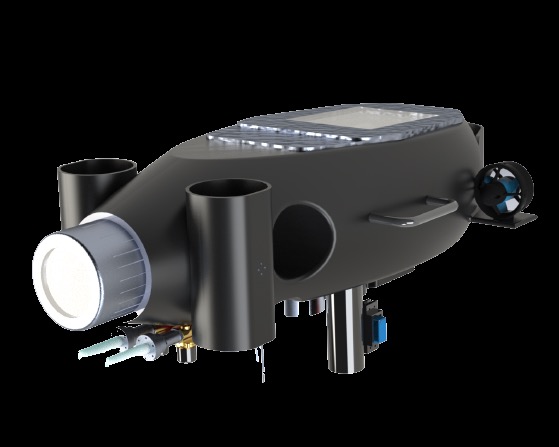
At IIT Kanpur, I joined AUV-IITK, the team building autonomous underwater vehicles. I led the software subsystem and worked on navigation, controls and vision. The vehicle had to find its way underwater and complete a task without someone steering it.
Vision helped it identify what it was looking for. Navigation estimated its position and route; controls turned those decisions into movement. SLAM, or simultaneous localisation and mapping, combined two problems: estimating where the vehicle was and building a map of its surroundings.
The 2021 Tarang report shows how our software connected object detection, sensors and thrusters with the mechanical and electrical systems built by the rest of the team. I led the software wing for RoboSub 2021, which took place online. The pandemic also limited testing: the report records that we could not do in-water acoustic tests. I stayed involved later as an adviser.
04 IIT Kanpur
Debating and campus life
Debating at IIT Kanpur.
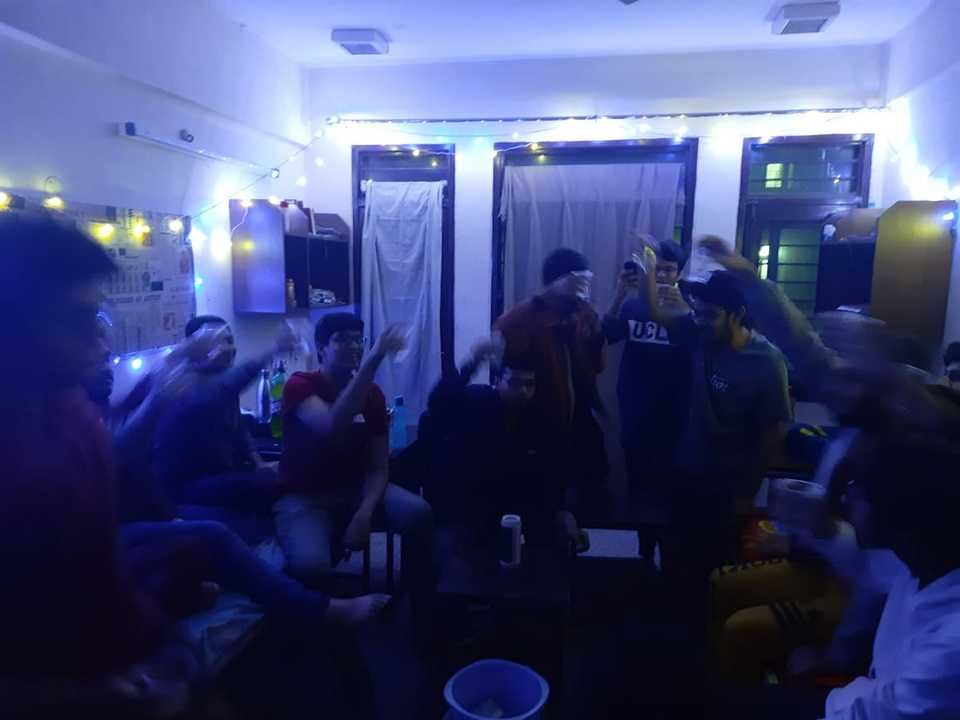
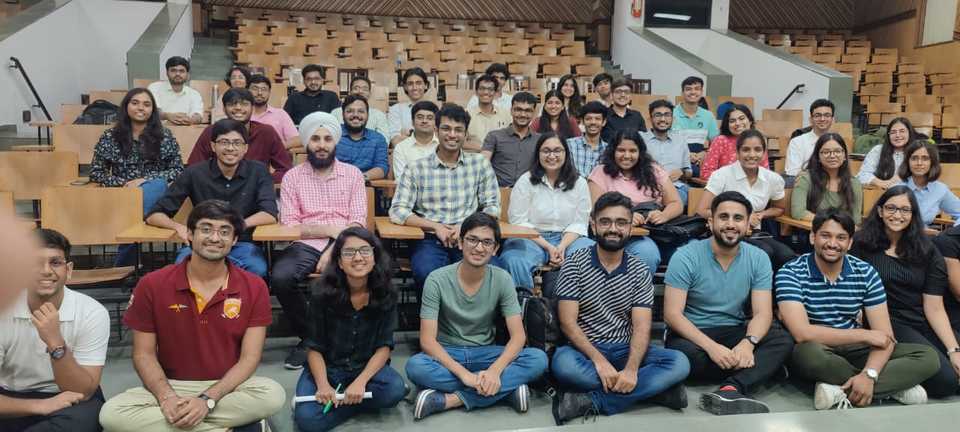
Robotics and classes were only part of my time at IIT Kanpur. I had liked public speaking since school, and at college I became coordinator of the Debate and Discussion Society. I spoke and adjudicated at national and international tournaments, and helped organise debates and discussions.
We also ran the first IITK Parliamentary Debate. There was as much organising as arguing: people, schedules and the event itself all needed attention. It happened alongside the engineering projects.
My college essays capture a less orderly version of those years. Coming back to campus changed how I spent my time. Friday nights and the end of exams became occasions; friends often made a place matter. In “How Things Change,” I wrote that my involvement in AUV and AI-for-social-good work had fallen after I returned. I was enjoying campus and wondering if I could work with the same intensity I had at home. Those essays were written while college was happening, and they still say more about how it felt than a list of roles would.
05 IIT Kanpur
Research, speech and healthcare
A speech dataset and pilot for intrapartum care.
During college, I worked on speech processing and an AI-for-social-good project with CARE India and Google Research India. It focused on intrapartum care, meaning care during labour and childbirth, in settings where experienced nurses may not always be available.
I led the project and worked on an AI-based solution. We initiated a pilot at four medical facilities in Bihar. Any wider expansion depended on the trials; it was proposed, not completed.
I also co-authored “Parturition Hindi Speech Dataset for Automatic Speech Recognition,” presented at NCC 2023. The paper was about a Hindi speech dataset for automatic speech recognition. The pilot was part of the broader care project. They were related efforts, with different outputs.
The project brought speech research into a specific healthcare setting. People worked on different parts of it, from research to the pilot.
06 IIT Kanpur
ITC and choosing consulting
A summer in ITC’s chocolate category, then placements.
I spent a summer in Bangalore with ITC’s Foods Business Division, working in the chocolate category. At 4 pm every day, I got to eat luxury chocolates for free. I put on weight, as you might expect.
The work covered raw materials, supply-chain traceability and competitor products. I also made close friends. I was away from home and campus, and it took me a while to settle in.
I was thinking about consulting by then. In “The First Job,” I wrote about why, including my uncertainty about which sector to choose. The internship ended without a pre-placement offer, so I went back to preparing for placements.
There were case interviews, shortlists and disappointments, with a few trips away from campus in between. I eventually chose BCG. The essay keeps the nerves and my misplaced confidence from that period; the process stayed uncertain almost to the end.
07 Work and travel
Avaana Capital
Sustainable construction and technical diligence.
Before BCG, I interned at Avaana Capital, a climate-focused venture fund. I worked on an investment thesis around sustainable construction, screened startups and evaluated pitches. I was trying to understand where a new technology could fit in construction and whether the business case held up.
I also did technical and financial due diligence for a plasma-based deep-tech startup. That meant looking closely at the technology and the financing, beyond the first pass involved in screening a pitch.
Some of my work was about the tools around investing. I wrote utilities to find potential leads on LinkedIn and move information from mailboxes into deal-flow software. They took some of the copying out of the workflow.
08 Work and travel
BCG: work in banks
An HR tool and a personalised learning programme.
At BCG, I worked on two projects for large public-sector banks. The first concerned the annual employee-transfer process. Requests, priorities and regional staffing needs all had to be weighed together. I built a full-stack HR tool and developed a priority-based algorithm to support the decisions.
The tool had to reflect how a transfer could affect staffing in more than one place. We had a short delivery window, so I developed the algorithm alongside the application.
My second project was a leadership-development programme. I helped curate the learning modules, training and coaching sessions, and led a team building web and mobile applications for a personalised learning-management system.
One project supported an HR process; the other supported a learning programme. Both involved figuring out how software could fit into work people were already doing.
09 Work and travel
Liberia
Construction work in Buchanan.
Consulting took me to Buchanan, Liberia, for a port-construction project connected to an iron-ore development. The work was a long way from the bank projects, both on the map and in what the project needed each day.
I worked on planning and governance, contractor relationships, design-engineering reviews and on-site operations. Part of the job was keeping the plan, the contractors’ work and engineering decisions in view at the same time.
I also worked on operational inefficiencies and on improving the planning and governance around the project. That meant following decisions through to what was happening on site.
After Buchanan, I wanted my next role to bring me closer to technology. That became part of my decision to leave consulting.
10 Work and travel
Wanting to get closer to technology
A change in direction after Liberia.
After Liberia, I wanted to get closer to technology again. Consulting had taken me into bank software and construction planning in Buchanan. I valued the variety, but wanted technology to sit nearer the centre of my next job.
I had not started out with a settled direction. In “The First Job,” I wrote about wanting to try different sectors before choosing one. By this point, I knew what I wanted more of.
Technical work had run through college too: underwater robots, speech research, web development and small workflow tools. At Entrepreneur First, I now work with people trying to build technology companies at the beginning.
I also started making things for myself again. Practice with Leo came from my experience preparing for consulting cases. Embedding Studio is a local workbench for exploring word embeddings. They let me keep working through questions by building something I can use.
11 What I do now
Entrepreneur First
Working with people before they have companies.
At Entrepreneur First, I work with people at the start of building a company. Often there is no company yet: just a person, some ambition and a set of questions that haven't settled into a direction.
I find talent and work with founders on early decisions: what to work on, who to build with, how to test an idea and how to explain it to others. The work is close to technology, though much of it happens in conversation.
I write as well. “The Mirror” and “The Most Common Lies Ambitious People Tell Themselves” came out of questions I keep returning to. The essays are a better record of that thinking than a description of talent investing.
Working with founders also makes me examine my own judgement. Writing is one way I do that: I can return to a question and see what I actually think.
12 What I do now
Tinkering again
Two projects I keep tinkering with.
I started tinkering again alongside my work. Practice with Leo grew out of my own case prep. I wanted an interviewer that could follow a candidate’s reasoning, respond to their questions and give useful feedback at the end.
Embedding Studio is a local workbench for Qwen3-Embedding-4B. It lets me combine word vectors, search for close matches and look at how the words sit in a three-dimensional PCA projection. Similarity comparisons use the full embedding vectors.
Those are the two projects on this site: one for case practice, one for getting a feel for word embeddings.
Get in touch
For projects, ideas, or a conversation.
skorde955@gmail.com